
Indonesian Cultural Traditions Every Visitor Should Experience
Indonesia is one of the most culturally diverse countries in the world, offering travelers an extraordinary combination of ancient traditions, artistic expressions, religious celebrations, and community customs. Spread across thousands of islands, the country is home to hundreds of ethnic groups, each contributing unique practices that shape Indonesia’s national identity. From traditional dances and colorful festivals to regional cuisines and sacred ceremonies, Indonesian culture creates unforgettable experiences for visitors interested in exploring the country’s heritage.
Understanding Indonesian cultural traditions every visitor should experience allows travelers to discover the deeper meaning behind local customs and appreciate how history, spirituality, and community values influence everyday life. Whether exploring the temples of Bali, the royal heritage of Yogyakarta, or the traditional villages of eastern Indonesia, visitors can experience a living culture that continues to connect generations.
Through discoverindonesianow, travelers can explore Indonesia’s fascinating traditions, cultural destinations, and authentic experiences while learning how to appreciate local customs respectfully.
Understanding the Rich Cultural Heritage of Indonesia
Indonesia’s cultural identity has developed through centuries of interaction between indigenous communities, regional kingdoms, religious traditions, and international trade networks. These influences have created a remarkable variety of languages, clothing styles, architecture, ceremonies, and artistic traditions.
Although Indonesian communities have distinctive cultural practices, many share important values related to family relationships, hospitality, cooperation, and respect for elders.
See also: Indonesian Traditional Ceremonies Meaning & Philosophy
The Diversity of Indonesian Ethnic Communities
Indonesia has more than 1,300 recognized ethnic group classifications according to its national statistical records. Major communities include the Javanese, Sundanese, Batak, Minangkabau, Balinese, Bugis, and many others.
Each community maintains traditions shaped by its historical experiences, geographical environment, and religious beliefs.
For example, Javanese culture is widely associated with refined performing arts and ceremonial etiquette, while Minangkabau traditions are known for their matrilineal social organization and distinctive architecture.
Understanding this diversity helps travelers recognize that Indonesian culture cannot be represented by a single island or tradition.
The Importance of Cultural Traditions in Everyday Life
Cultural traditions remain important aspects of Indonesian society, particularly during family celebrations, religious observances, agricultural events, and community gatherings.
Traditional customs provide opportunities for relatives and neighbors to cooperate, share responsibilities, and preserve knowledge inherited from previous generations.
While modern lifestyles have influenced how some customs are practiced, cultural heritage remains a meaningful source of identity for many Indonesian communities.
Experience Traditional Balinese Religious Ceremonies
Bali is one of Indonesia’s most recognized cultural destinations, famous for its temples, artistic traditions, and distinctive Hindu religious practices.
Religious ceremonies take place throughout the year, creating opportunities for respectful visitors to observe the island’s spiritual heritage.
Galungan and Kuningan Celebrations
Galungan is an important Balinese Hindu celebration associated with the victory of dharma, or righteousness, over adharma, or unrighteousness.
During this period, families visit temples, prepare offerings, and decorate streets with penjor, which are tall bamboo poles adorned with traditional ornaments.
Kuningan is observed ten days after Galungan, completing the festive period.
What Makes These Celebrations Special?
Visitors may see beautifully decorated streets, traditional clothing, and families participating in religious activities.
These celebrations demonstrate how Balinese communities maintain spiritual relationships while strengthening family connections.
Travelers should remember that temple rituals are religious observances rather than tourist performances.
Nyepi: Bali’s Unique Day of Silence
Nyepi marks the Balinese Saka New Year and is one of the island’s most distinctive cultural experiences.
The day is dedicated to silence, reflection, and spiritual renewal.
During Nyepi, outdoor activities are restricted, businesses generally close, and visitors are expected to remain within their accommodations.
The Cultural Meaning of Nyepi
Nyepi encourages self-reflection, personal discipline, and awareness of the relationship between human life and the surrounding environment.
For travelers, the observance provides an unusual opportunity to experience the island’s quieter atmosphere while respecting local religious requirements.
Discover the Beauty of Traditional Indonesian Dance
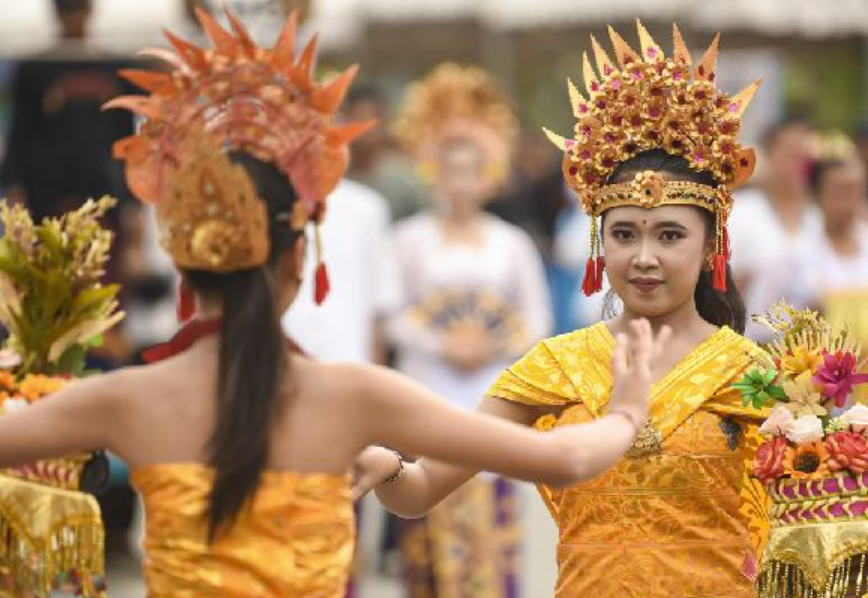
Traditional dance is one of Indonesia’s most expressive cultural art forms. Each region has developed distinctive movements, musical styles, costumes, and performance traditions.
Some dances tell historical stories, while others serve ceremonial, social, or religious purposes.
Balinese Legong Dance
Legong is a classical Balinese dance known for its controlled movements, expressive gestures, intricate hand positions, and elaborate costumes.
The dance is traditionally associated with courtly artistic traditions and is often accompanied by gamelan music.
Visitors can experience Legong performances at cultural venues and selected traditional settings in Bali.
The Artistic Importance of Legong
Legong demonstrates the precision and discipline involved in Balinese performing arts.
Its movements and visual expressions communicate stories and emotions, making it an engaging introduction to traditional Indonesian dance.
Saman Dance From Aceh
Saman is a traditional dance associated with the Gayo community of Aceh.
Performers sit closely together and create synchronized movements through rhythmic body gestures, clapping, and vocal expressions.
The performance requires exceptional coordination and teamwork.
Saman is recognized by UNESCO as part of Indonesia’s intangible cultural heritage.
What Visitors Can Learn From Saman
Saman reflects cooperation, discipline, collective identity, and cultural expression.
Its carefully coordinated movements illustrate how traditional performances can communicate values through shared participation.
Kecak Dance in Bali
Kecak is one of Bali’s most recognizable performances, featuring groups of performers producing rhythmic vocal chants.
Many performances present episodes from the Ramayana, particularly the story involving Rama, Sita, and Hanuman.
Kecak performances are especially popular in cultural venues around Ubud and Uluwatu.
Why Kecak Is a Memorable Cultural Experience
Unlike many traditional dances that rely heavily on instrumental accompaniment, Kecak creates its distinctive atmosphere through collective vocal rhythms.
The combination of storytelling, movement, and chanting offers visitors an introduction to Bali’s theatrical traditions.
Explore Traditional Batik Art and Textile Heritage
Batik is one of Indonesia’s most important artistic traditions and an internationally recognized symbol of Indonesian cultural identity.
The art involves creating patterns on fabric using wax-resist dyeing techniques.
Different regions have developed distinctive designs influenced by local history, natural environments, and cultural symbolism.
Traditional Batik Making in Java
Yogyakarta, Surakarta, and Pekalongan are among the best-known centers of Indonesian batik production.
Traditional artisans use tools such as the canting, a small instrument that applies hot wax to fabric.
The fabric is then dyed, and the wax is removed to reveal the design.
Complex handmade batik can require considerable time and technical skill.
The Cultural Meaning of Batik Patterns
Certain traditional batik patterns have historically been associated with social status, ceremonial occasions, or symbolic values.
For example, some classical Javanese motifs were historically restricted to royal use.
Today, batik is widely worn for professional activities, celebrations, formal gatherings, and everyday occasions.
Participate in a Batik Workshop
Travelers visiting Java can participate in workshops that introduce basic batik techniques.
These experiences provide insight into traditional craftsmanship and allow visitors to appreciate the effort involved in handmade textile production.
Workshops also offer opportunities to support local artisans and cultural preservation.
Experience Traditional Indonesian Gamelan Music
Gamelan is a traditional Indonesian musical ensemble particularly associated with Java, Bali, and Sunda.
It commonly features instruments such as metallophones, gongs, drums, and other percussion instruments.
Different regional gamelan traditions have distinctive musical structures, tuning systems, and performance styles.
Gamelan Music in Javanese Culture
Javanese gamelan music is commonly performed during cultural ceremonies, theatrical productions, and traditional gatherings.
It frequently accompanies wayang performances and classical dances.
The layered musical patterns create a distinctive sound that reflects the collaborative nature of ensemble performance.
Balinese Gamelan Performances
Balinese gamelan often features energetic rhythms, intricate interlocking musical patterns, and dramatic changes in tempo.
It accompanies religious ceremonies, traditional dances, and theatrical performances.
The Cultural Importance of Gamelan
Gamelan represents artistic cooperation because each musician contributes to the overall composition.
The tradition also demonstrates how music connects community celebrations, storytelling, and spiritual activities.
In 2021, UNESCO recognized gamelan as part of the Intangible Cultural Heritage of Humanity.
Watch Traditional Wayang Puppet Performances
Wayang is an important Indonesian storytelling tradition that combines dramatic performance, music, philosophy, and visual art.
Wayang performances are especially associated with Java and Bali, although different forms exist across Indonesia.
Stories may draw from the Ramayana, Mahabharata, local legends, and historical narratives.
Wayang Kulit Shadow Puppetry
Wayang kulit uses intricately crafted flat puppets, traditionally made from treated leather, to create shadows on an illuminated screen.
A puppeteer known as a dalang controls the characters, narrates the story, and coordinates the performance with musical accompaniment.
Traditional performances can continue for several hours and may include humor, ethical questions, and philosophical themes.
The Philosophy Behind Wayang Kulit
Wayang stories frequently explore the consequences of human decisions, the conflict between good and evil, and the importance of moral responsibility.
Characters often represent complex personalities rather than simple examples of right and wrong.
This makes wayang an important medium for communicating cultural values across generations.
Wayang Golek Wooden Puppets
Wayang golek is particularly associated with Sundanese communities in West Java.
Instead of flat shadow puppets, performers use three-dimensional wooden figures.
The puppets are controlled with rods and brought to life through dialogue, movement, and storytelling.
Visitors can discover wayang traditions through cultural performances, museums, and artisan workshops.
Discover Traditional Indonesian Wedding Customs
Wedding ceremonies in Indonesia reflect the country’s cultural and religious diversity.
Different ethnic communities have developed distinctive marriage traditions involving ceremonial clothing, symbolic objects, family blessings, and traditional celebrations.
Javanese Wedding Traditions
Traditional Javanese wedding ceremonies may include several important rituals, depending on family preferences and local customs.
One well-known practice is siraman, a ceremonial bathing ritual performed before marriage.
Another is the panggih ceremony, which marks the formal meeting of the bride and groom in certain Javanese wedding traditions.
The Meaning of Javanese Wedding Rituals
These traditions emphasize purification, family blessings, mutual respect, and preparation for married life.
They demonstrate the importance of family relationships within Javanese society.
Minangkabau Wedding Traditions
The Minangkabau people of West Sumatra are known for their matrilineal kinship system, in which family lineage and certain forms of inherited property pass through the female line.
Wedding customs reflect the significance of family relationships, community participation, and customary obligations.
Traditional celebrations may feature elaborate clothing, decorative accessories, regional music, and distinctive food.
The Cultural Value of Minangkabau Weddings
Minangkabau wedding traditions highlight the importance of kinship, family responsibilities, and preserving cultural identity.
They also provide opportunities for extended families to strengthen relationships.
Explore Indonesia’s Traditional Food Culture
Food is an essential part of Indonesian cultural life. Regional cuisines reflect local agricultural products, trading history, religious practices, and family traditions.
Exploring traditional food provides visitors with an enjoyable way to understand Indonesia’s cultural diversity.
Rendang From West Sumatra
Rendang is a famous Indonesian dish strongly associated with Minangkabau cuisine.
It is commonly prepared by slowly cooking meat with coconut milk and a mixture of spices until the liquid is substantially reduced.
Rendang is frequently served during important family celebrations and community gatherings.
The Cultural Significance of Rendang
Traditional rendang preparation requires patience, careful cooking, and knowledge passed between generations.
Its association with ceremonial meals reflects the importance of hospitality and shared food in Indonesian society.
Gudeg From Yogyakarta
Gudeg is a traditional Javanese dish made primarily from young jackfruit cooked with coconut milk and seasonings.
It is widely associated with Yogyakarta and is commonly served with rice and accompaniments such as chicken, eggs, and sambal.
The dish offers visitors an opportunity to explore the distinctive sweet flavors found in parts of Central Javanese cuisine.
Tumpeng: A Symbolic Indonesian Rice Dish
Tumpeng consists of cone-shaped rice accompanied by assorted side dishes.
It is commonly prepared for celebrations, thanksgiving events, and significant community occasions.
The cone shape has symbolic interpretations associated with mountains, gratitude, and relationships between people and the divine.
Why Tumpeng Is Important
Tumpeng demonstrates how food can function as both nourishment and cultural expression.
Sharing the meal reinforces community relationships and the celebration of important milestones.
Visit Traditional Indonesian Villages
Traditional villages provide opportunities to observe regional architecture, customary practices, local craftsmanship, and community lifestyles.
Some villages actively preserve inherited forms of housing and social organization, while others combine traditional customs with modern development.
Penglipuran Village in Bali
Penglipuran is a traditional Balinese village known for its organized layout, distinctive architecture, and cultural preservation efforts.
The village attracts visitors interested in Balinese community life and traditional environmental practices.
Visitors can observe local architecture, gardens, and everyday cultural activities while respecting residents’ privacy.
Wae Rebo Village in Flores
Wae Rebo is a traditional village located in the mountainous region of Flores, East Nusa Tenggara.
It is known for its distinctive cone-shaped traditional houses, called Mbaru Niang.
Reaching the village involves a mountain trek, making the journey part of the cultural experience.
The Importance of Wae Rebo
Wae Rebo demonstrates the connection between architecture, community organization, and environmental adaptation.
Its traditional houses reflect local building knowledge and the importance of maintaining collective cultural heritage.
Kampung Naga in West Java
Kampung Naga is a traditional Sundanese settlement recognized for maintaining customary architecture and community practices.
Residents preserve various inherited traditions related to housing, social conduct, and environmental relationships.
Visitors can learn about local cultural values while observing the rules established by the community.
Learn About Traditional Indonesian Architecture
Traditional Indonesian architecture reflects regional environments, social systems, spiritual beliefs, and historical construction techniques.
Many traditional houses use locally available materials and designs adapted to tropical conditions.
Rumah Gadang in West Sumatra
Rumah Gadang is a traditional Minangkabau house recognized by its distinctive roof shape, which resembles upward-curving buffalo horns.
These houses are closely connected to Minangkabau family organization and cultural identity.
They often function as important symbols of kinship and inherited family heritage.
Tongkonan Houses in Toraja
Tongkonan houses are traditional structures associated with the Toraja people of South Sulawesi.
They are recognized by their dramatic curved roofs and decorative carvings.
Tongkonan buildings represent ancestral relationships, family identity, and social traditions.
Traditional Joglo Houses in Java
Joglo houses are an important architectural form associated with Javanese traditions.
They feature distinctive roof structures supported by prominent central columns.
Historically, some Joglo houses were associated with families of elevated social standing.
Today, this architectural style remains an important expression of Javanese heritage.
Experience Traditional Indonesian Festivals
Cultural festivals provide memorable opportunities to experience Indonesia’s diversity through public celebrations, performances, ceremonies, and community activities.
Some festivals are religious observances, while others focus on artistic heritage or agricultural traditions.
Sekaten Festival in Yogyakarta
Sekaten is a traditional celebration connected to the commemoration of the birth of the Prophet Muhammad.
It has historical associations with Javanese royal courts and Islamic cultural development.
Visitors may encounter traditional gamelan performances and other activities associated with the celebration.
Pasola Festival in Sumba
Pasola is a traditional mounted spear-throwing event practiced by certain communities in western Sumba.
It is associated with agricultural rituals and indigenous Marapu traditions.
The event features skilled horse riders participating in a physically demanding ceremonial competition.
Because Pasola involves real physical risks, visitors should observe from designated safe areas and follow local guidance.
Seren Taun Harvest Festival
Seren Taun is a traditional harvest thanksgiving celebration practiced by certain Sundanese communities.
It expresses gratitude for agricultural production and highlights the cultural importance of rice cultivation.
The festival may include traditional music, processions, ritual activities, and communal gatherings.
Understand Indonesian Hospitality and Social Etiquette
Beyond major festivals and ceremonies, some of the most meaningful Indonesian cultural experiences involve everyday interactions.
Learning basic social customs can help travelers communicate respectfully with local communities.
The Tradition of Gotong Royong
Gotong royong refers to mutual assistance and collective cooperation.
The concept is visible in community activities such as preparing celebrations, maintaining shared spaces, and helping neighbors during important events.
It reflects the value placed on shared responsibility within many Indonesian communities.
Respect for Elders
Respect for older family members is an important social value in many Indonesian cultures.
Younger people may use polite forms of address, respectful gestures, and customary expressions of courtesy.
The specific practices vary between regions and communities.
Greeting People Respectfully
Handshakes are common in many Indonesian social settings, although preferences depend on individual beliefs and local customs.
Travelers should observe how people greet one another and avoid assuming that physical contact is always appropriate.
Using polite expressions such as terima kasih for thank you and permisi for excuse me can create positive interactions.
Appropriate Behavior When Visiting Homes
When visiting Indonesian homes, guests may be expected to remove their shoes before entering.
Hosts may also offer food or drinks as an expression of hospitality.
Accepting hospitality respectfully and following household customs demonstrates appreciation for local traditions.
The Role of Religion in Indonesian Cultural Traditions
Religion has played an important role in shaping Indonesian cultural practices.
The country is home to diverse religious communities, and many local traditions reflect historical interaction between indigenous beliefs and established religious teachings.
Islamic Cultural Traditions
Islam influences many Indonesian religious celebrations, family customs, and community activities.
Observances such as Ramadan and Eid al-Fitr are widely celebrated.
In different regions, these religious occasions may also include distinctive local traditions and customary foods.
Hindu Cultural Traditions
Hindu traditions are particularly visible in Bali, where temple ceremonies, offerings, and religious festivals remain central aspects of community life.
Balinese Hindu practices reflect a combination of religious teachings and regional cultural heritage.
Buddhist and Christian Traditions
Buddhist communities maintain significant religious observances, including Vesak, known in Indonesia as Waisak.
Christian communities also celebrate religious events through local cultural expressions that differ between regions.
This diversity highlights the many ways religious beliefs contribute to Indonesia’s cultural landscape.
How to Experience Indonesian Cultural Traditions Respectfully
Cultural tourism offers valuable opportunities for learning, but visitors should remember that many traditions have personal, religious, and community significance.
Respectful participation helps protect local customs and creates more meaningful travel experiences.
Choose Community-Based Cultural Experiences
Travelers should consider cultural activities organized or supported by local communities.
Community-led experiences can provide more accurate cultural explanations while supporting local livelihoods.
Traditional craft workshops, guided village visits, and local performances are examples of activities that can encourage responsible cultural tourism.
Ask Permission Before Taking Photographs
Photography may be restricted during certain religious ceremonies, private family events, or activities involving sacred objects.
Visitors should request permission before photographing individuals or entering private areas.
Respecting these boundaries helps maintain trust between travelers and local communities.
Follow Local Dress Codes
Religious sites and ceremonial locations may require modest clothing or traditional garments.
In some Balinese temples, visitors may need to wear a sarong and sash.
Travelers should follow the requirements of each location rather than assuming the same rules apply everywhere.
Avoid Disrupting Traditional Ceremonies
Visitors should remain quiet during prayers, avoid blocking ceremonial processions, and follow instructions from local organizers.
Some ceremonies may not be open to tourists.
Recognizing these restrictions demonstrates respect for the communities maintaining the traditions.
Best Indonesian Destinations for Cultural Experiences
Indonesia offers numerous destinations where travelers can discover different aspects of its cultural heritage.
Bali for Hindu Ceremonies and Traditional Arts
Bali is an excellent destination for exploring temple architecture, traditional dances, gamelan music, and religious festivals.
Ubud is particularly associated with artistic and cultural activities, while other regions of Bali maintain distinctive village traditions.
Yogyakarta for Javanese Cultural Heritage
Yogyakarta is widely recognized for its traditional arts, royal heritage, batik craftsmanship, and cultural performances.
Travelers can explore historical sites, attend wayang performances, and participate in artisan workshops.
West Sumatra for Minangkabau Traditions
West Sumatra offers opportunities to discover Minangkabau architecture, regional cuisine, and cultural customs.
Traditional houses and community activities provide insight into the region’s matrilineal heritage.
South Sulawesi for Toraja Culture
The Toraja highlands are known for traditional Tongkonan houses, intricate carvings, and ceremonial traditions.
Visitors can explore cultural villages and learn about the significance of family relationships and ancestral heritage.
Flores and Sumba for Eastern Indonesian Traditions
Flores and Sumba provide opportunities to discover traditional villages, distinctive architecture, textiles, and regional ceremonial practices.
These destinations offer experiences that differ considerably from the better-known cultural attractions of Bali and Java.
Why Indonesian Cultural Traditions Remain Important Today
Traditional practices continue to play a valuable role in Indonesian society despite changes brought by technology, tourism, and urban development.
They preserve cultural knowledge while helping communities maintain a sense of identity.
Preserving Knowledge Across Generations
Traditional music, dance, craftsmanship, and ceremonies depend on knowledge passed between experienced practitioners and younger generations.
Cultural education and community participation help maintain these skills.
Strengthening Community Relationships
Many traditions bring families and neighbors together for shared activities.
These occasions strengthen relationships and encourage cooperation within communities.
Supporting Local Artists and Craftspeople
Cultural activities can provide economic opportunities for dancers, musicians, textile makers, woodcarvers, and other artisans.
Responsible tourism can support these traditions by creating demand for authentic cultural experiences and locally produced crafts.
Encouraging Cultural Understanding
Learning about traditions from different regions helps visitors appreciate Indonesia’s diversity.
It also encourages recognition that cultural practices reflect specific histories and community values.
Frequently Asked Questions About Indonesian Cultural Traditions
What Are the Most Popular Indonesian Cultural Traditions Every Visitor Should Experience?
Popular experiences include Balinese religious celebrations, traditional dance performances, batik workshops, gamelan music, wayang puppetry, regional food traditions, and visits to traditional villages. The best choices depend on the destination and visitors’ interests.
Why Is Indonesian Culture So Diverse?
Indonesia’s cultural diversity developed through its geography, numerous ethnic communities, historical kingdoms, indigenous traditions, religious influences, and centuries of international trade and migration.
What Is the Best Place to Experience Traditional Indonesian Culture?
Bali and Yogyakarta are popular destinations for cultural experiences, but West Sumatra, South Sulawesi, Flores, Sumba, and many other regions also preserve distinctive traditions.
Can Foreign Visitors Participate in Indonesian Traditional Ceremonies?
Some ceremonies welcome visitors, while others are private or restricted to community members. Travelers should obtain permission when appropriate and follow local customs and religious requirements.
What Traditional Indonesian Art Forms Should Tourists Explore?
Visitors can explore batik making, gamelan music, wayang puppetry, woodcarving, weaving, and regional dance traditions. Each art form reflects the history and identity of the community where it developed.
How Can Travelers Help Preserve Indonesian Cultural Heritage?
Travelers can support local artisans, choose community-led experiences, respect religious and cultural rules, and learn about traditions from knowledgeable local guides. Responsible behavior helps communities maintain control over their cultural heritage.
Conclusion
Exploring Indonesian cultural traditions every visitor should experience is one of the most rewarding ways to understand the country’s history, diversity, and social values. Indonesia’s cultural richness extends far beyond famous tourist attractions, offering meaningful experiences through traditional ceremonies, artistic performances, regional cuisine, architecture, and everyday community practices.
From the spiritual celebrations of Bali and the classical arts of Java to Minangkabau heritage in West Sumatra and traditional village life in eastern Indonesia, every region offers a different perspective on Indonesian identity.
These traditions demonstrate the importance of family, cooperation, creativity, respect, and cultural continuity. They also remind travelers that meaningful cultural experiences require curiosity, understanding, and consideration for local communities.
Through discoverindonesianow, visitors can explore Indonesia’s remarkable cultural heritage, discover authentic destinations, and gain valuable knowledge about the traditions that make the archipelago one of the world’s most fascinating cultural destinations.


2 Comments